Bungie announced today that Destiny 2 gets one final content update on June 9 and then active development ends. A decade in this universe ends not with a bang but with a quiet press release. Some thoughts on what was, what they broke, and what stays.
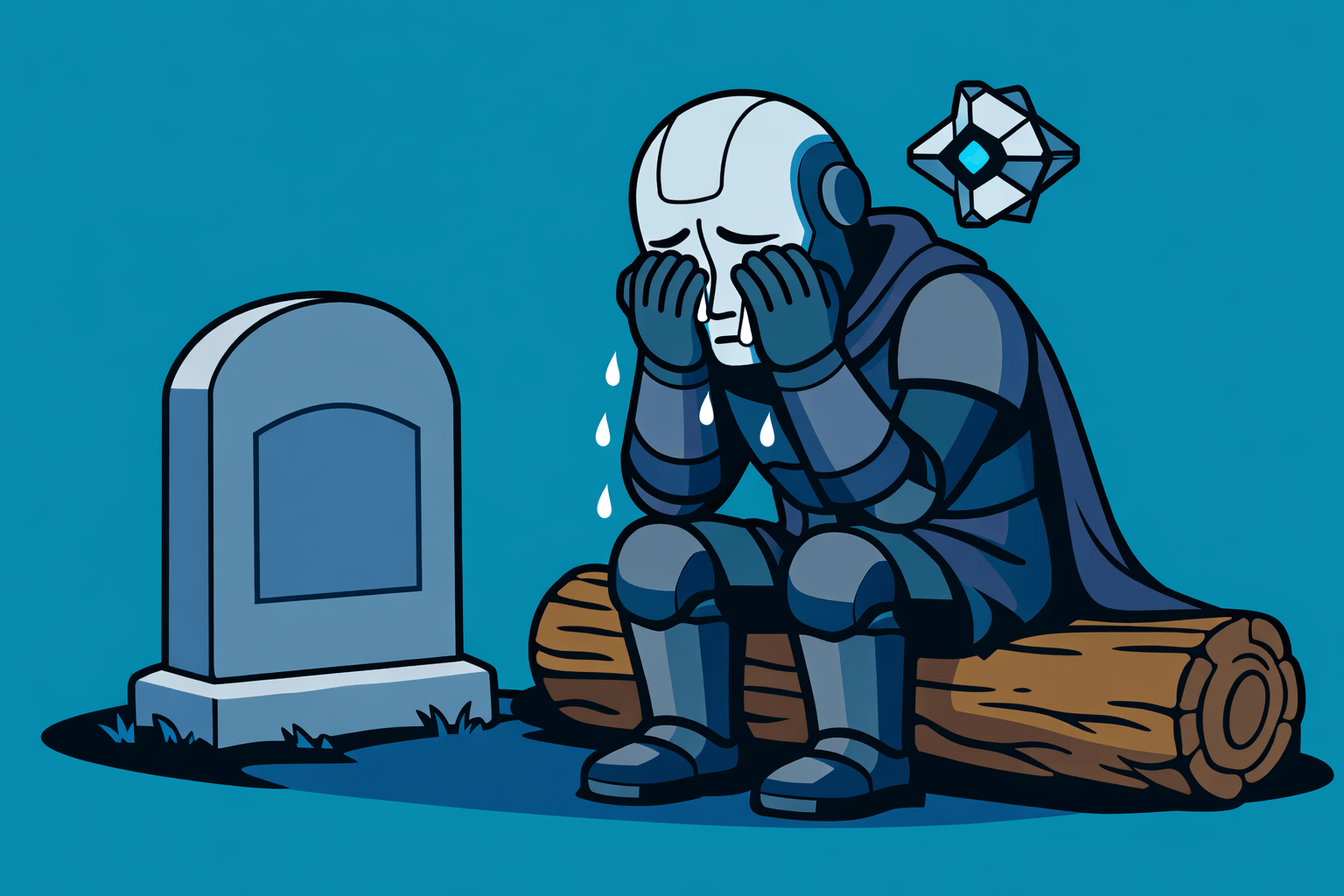
Bungie announced today that Destiny 2 gets one final content update on June 9, 2026, and then active development ends. They are not calling it a shutdown. The phrase they used was “every end is a new beginning,” and the language is deliberately soft. The servers stay on. The game stays playable, the way Destiny 1 has stayed playable since the lights dimmed in 2017. The studio is “incubating our next games.” That’s the wording. I have been playing this game since the original beta. I have spent more hours in this universe than I want to admit, many of them with my daughter, first on a couch in our house and later from opposite sides of the planet. I need to write something down.
What was actually said
The framing matters because it sets the terms of what we are losing. Bungie’s own statement: “While our love for Destiny 2 has not changed, it has become clear that after The Final Shape, we have reached the time for our shared worlds, and Destiny, to live beyond Destiny 2.” The final patch is called Monument of Triumph. It ships June 9. After that, the seasons stop rolling and the world stops being updated.
The kinder version of that sentence is the one Ethan Gach at Kotaku wrote: “the number of weekly players fell off a cliff in early 2026.” Behind the gentle wording is Sony’s $765 million impairment charge against Bungie’s assets after Marathon underperformed earlier this year, and the layoffs that came before it, and the layoffs that came before those. The studio is being asked to incubate its way out of a hole the parent company already wrote down on the balance sheet. The marketing language is doing its job. The numbers are doing theirs.
I wrote about Renegades in December and said I was playing the story, getting the lightsaber, and I was out. I did not expect “out” to mean everybody.
The Tower was where we met
My daughter went to university half a world away. Time zones, semesters, a flight that takes the better part of a day with the layovers. We FaceTimed. We texted. We did all the things parents and grown kids do to keep the line open when the line is the only thing left between you. None of it worked the way Destiny worked.
We met in the Tower. That was the rule. Whatever time it was for her, whatever time it was for me, we would log in and our two Guardians would walk to each other and stand in front of the postmaster and just be in the same room. Sometimes we ran a strike. Sometimes we did a Nightfall. Sometimes we just stood there and talked, our characters shifting weight in front of a vendor that had nothing interesting to sell us, while she told me about a class or a roommate or what she was making for dinner. The game was the excuse. The Tower was the actual point.
She plays Warlock. Auto rifles and bows. She never had the patience for a sniper rifle and never pretended she did, which I respected the second she told me. Bows taught her the rhythm between shots, that pause where you decide whether the next one is worth the draw. Auto rifles taught her to keep moving and read what was in front of her. Warlock taught her that the most useful thing you can do in a fight is sometimes drop a rift and keep your team alive instead of chasing the kill. That is a fine thing for a kid to learn. She thought Cayde was funny and Zavala was a grump and Ikora was the one who actually ran the place. She was right.
When she was small we played on the couch. When she was older we played from different continents. The room did not change. The Tower was always there. You logged in and you were standing in the same place, in the same light, by the same vendor, hearing the same wind off the Last City. The geography of our relationship stopped depending on either of us being in the same country. It depended on a server somewhere that knew where to put both of our characters at the same time.
That is what is actually ending. Not the strikes, not the raids, not the seasonal artifact mods. The meeting place.
The Dads of Destiny clan grew past 50,000 members because thousands of us figured out something similar. The game’s rhythm of strikes and patrols and slow-cooked raids was just slow enough to be a thing you could do with your kid in the room, or your kid in another time zone, or a friend you hadn’t seen since college. Bungie’s old community manager DeeJ once interviewed the founders about “how they find the time to raise Fusion Rifles between bouts of raising children.” It was a joke and it was also the entire premise of the clan. There was a place in this game for people whose lives did not have eight uninterrupted hours in them.
Patricia Hernandez at Kotaku wrote a piece in 2017 about a grandfather whose wife had died on Christmas of 2014, three months after Destiny launched. He told her, “This game actually kinda saved my life. My wife actually passed away Christmas 2014, all my family is already passed away.” The community fundraised to send him to GuardianCon. That was the kind of game Destiny was. Not a game that was good for people in a wellness-podcast sense, but a game that was a place. Places matter. Especially the ones that stay open at three in the morning when everywhere else is closed.
I wrote about Zavala as a father figure in 2024, right before The Final Shape shipped. Looking back, I think the reason that piece landed the way it did is that the game itself had spent a decade teaching me what kind of dad I wanted to be. Show up. Be grumpy and then learn to be vulnerable. Do not make your grief everyone else’s problem. Lead by being the one who keeps going. Keith David and Lance Reddick gave us a dad who learned, in front of us, how to be a better one. That mattered to me.
The community saved people. That part is real.
Bungie launched an official mental health resources page in December 2021, partnered with Guardians Mental Health. The official line: “our intention is to destigmatize mental health issues by providing and updating these resources over time. It’s okay to not be okay. You aren’t alone.” The page is still there. It is not marketing. The Bungie Foundation’s Game2Give charity drive has raised over $10 million lifetime for children’s hospitals. The 2023 drive alone hit $3.1 million. Real money, given by real people, for sick kids, because of a video game.
I know stories that are not in any article. So does anyone who played long enough. There is a particular thing that happens in a clan when one member goes quiet for a week and three other members start texting and one of them is driving over. It is not a feature Bungie shipped. It is what happens when you give a few hundred thousand people a shared place to be for a decade. Whatever else is true about Destiny’s last seven years, that part was real, and it kept some people alive. You don’t write that in a Steam review.
How they drove the rest of us away
The numbers tell a clean story. Steam concurrent peaks, in order: Lightfall in February 2023 opened to 316,750 players and the worst-rated paid DLC in franchise history at 29% positive. The Final Shape in June 2024 opened to 314,634, the last great expansion, the conclusion of a decade-long arc that actually worked. Edge of Fate in July 2025 opened to 99,193. Less than a third of Final Shape. Roughly 90% below Lightfall. Renegades opened in December 2025 to 71,278. The line goes straight down and it does not come back. PC Gamer’s coverage of the Edge of Fate collapse called it “Bungie finally paying the price for years of mistakes” and named the Content Vault as the original sin. They were right.
The Content Vault is where the trust broke for me. In November 2020, Bungie removed the Red War campaign, Curse of Osiris, Warmind, and several full destinations from Destiny 2. People had paid for that content. Critics called it “a euphemism for deleting products that consumers already bought and paid for.” A class action followed. Bungie settled. Court filings later revealed that Bungie cannot internally restore the Red War campaign even if they wanted to. The introductory story of Destiny 2, the thing that taught a new player what this universe even was, is gone. From everyone. Forever. You cannot show your friend the moment Ghost talks Cayde out of stealing a ship from Amanda Holliday’s hangar because that scene no longer exists in any build of the game that any human being can run.
Right around the same time Bungie introduced weapon sunsetting, which retired weapons on a rolling basis to force players to chase new gear. People hated it. Bungie reversed course four months later. The assistant director was honest about it: “While we still believe in these goals, it’s clear our execution was off the mark.” The reversal was the right call. The message was already received. The rules you played by yesterday do not necessarily apply tomorrow. The time you invested might not carry forward. The God Roll you spent a month grinding for could be made irrelevant by a patch note in a TWAB.
Then came the design philosophy that catered hardest to the top one percent. Contest mode raids running for 24 or 48 hours where the game was tuned for the best teams in the world. Salvation’s Edge in 2024 ran 19 hours and 25 minutes before the first clear, the longest first-clear in franchise history. Grandmaster Nightfalls became the gate for the best loot. The endgame got harder while the entry experience got thinner. The people who quit were not the hardcore players. The hardcore players are still right now posting on Reddit about Edge of Fate being too easy. The people who quit were the ones with two hours on a Tuesday night who wanted to play with their kid and could not figure out where to begin.
The director changes and the Portal era
Joe Blackburn stepped down as game director in January 2024, after The Final Shape was already locked in. Tyson Green took over. I do not fault Green. He inherited a studio that had laid off 220 people the previous summer, about 17% of the company. The CEO Pete Parsons’ line at the time was that Bungie had been “overly ambitious” and the safety margins “were subsequently exceeded.” The community then discovered that Parsons had spent over $2.3 million on classic cars in the months before the layoffs, posted on Bring A Trailer. He set his Twitter to private. There is no recovering from that. Not really. You can keep the lights on. You cannot earn that trust back.
What followed was the Portal system, which is what is running the game right now. Activities live on a menu. You queue, you complete, you collect, you leave. As I wrote in the Renegades post, one reviewer described it as “someone made a Kanban board of Destiny 2 stuff.” That is exactly what it is. The thing Destiny used to do, the thing that nothing else has ever quite duplicated, was that you could fall into a glowing hole in a wall and find a gun that changed your life. The world was full of secrets you were not told about. People found stuff on accident. Mountaintop was a Pinnacle quest in the Crucible that took weeks. The Whisper of the Worm mission appeared as a Heroic Public Event on Io for twenty minutes. Outbreak Perfected required actual community puzzle-solving across servers. None of that ships anymore. It got Kanban’d.
A decade of muscle memory. A decade of inside jokes. Don’t fucking peek the door. Get the wizard. Loot Cave. I’ll see you in the wild, Guardian. Eyes up. A decade of established mental models, and the studio asked you to relearn the game four or five different times. Some of those changes were necessary. Some were the studio’s pride. The ones that worked were the ones that respected what the player already knew. The ones that drove people away were the ones that demanded the player throw out what they knew and start over from a new menu.
What Destiny was, at peak
The number Bungie published in September 2021 was 187 million unique players and 9.8 billion hours played across the franchise. Call it 1.1 million human-years of attention, sunk into one shared world. You don’t accumulate that without it meaning something. A handful of games in history have crossed that line and most of them are at least partly about giving each other a place to be: World of Warcraft, Minecraft, Fortnite, Roblox. Destiny was the one that did it inside a story you could actually care about. The Traveler. The Darkness. The Light. The slow ten-year reveal of what The Witness actually was. Cayde’s death in Forsaken, which is still the best moment Bungie ever wrote. The Final Shape’s climax inside the Traveler itself.
When Lance Reddick died in March 2023, Destiny players gathered at Zavala’s position in the Tower, kneeled, and emoted Peaceful Rest. Kotaku’s coverage of the vigil ran with the subhead “Eyes up, Guardians, we’re fucking crying over here.” Bungie’s official tribute called him “an iconic presence on screen, in Destiny, and most importantly in person.” The community organized silent sit-downs in a video game lobby. That is not normal video game behavior. That is a place mourning a neighbor.
When Cayde-6 died in Forsaken, my daughter and I went quiet wherever we were. When Lance Reddick died, my daughter remembered Cayde. That is what a decade in one universe does. The Tower was a room in our house, and then a room we both walked into from opposite sides of the world.
What stays
The game keeps running. Bungie said it explicitly. Destiny 2 remains playable, the way Destiny 1 is still playable: log in, run strikes, run old raids with your friends, the servers stay on. The vendors stop refreshing. The seasons stop rolling. The story stops advancing. It becomes a museum of itself. People still live there. The bars are still open. Nothing new gets built.
What’s actually ending is the live-service contract. The unspoken promise that if you showed up every Tuesday there would be something new for you to do has been canceled. That promise was the engine that powered the friendships, the clans, the rituals of family play. Take the engine away and what is left is a beautiful, empty world.
I will keep my characters. I will run the lightsaber expansion to completion. I will take my daughter into Salvation’s Edge one weekend before the matchmaking pools thin out so she can say she stood inside the Witness. I will keep the friends I made in clans. I will keep what Zavala taught me, which is that being grumpy and showing up are not the same thing as being closed off, and that the people you lead deserve to see you grow.
A decade. One game. A Tower where my daughter and I always found each other, no matter what continent she was on.
Eyes up, Guardian. One last time.